
Chaozhou
Wood Carving

Artforms > Chaozhou Wood Carving

Dating back to the Tang Dynasty, Chaozhou woodcarving is one of the nation’s oldest forms of woodcarving. Popularised during the shift between the Ming and Qing Dynasties, Chaozhou woodcarving became a staple in temple and ancestral architectural and interior design. While Ming artisans would often embrace the natural colour of the wood, by the turn of the Qing Dynasty, the practice of coating these carvings in gold, red, blue-green, black, and white had emerged. Various techniques of woodcarving were adopted by Chaozhou practitioners, including openwork carving, relief, in-the-round, and intaglio – all of which created unique and distinctive patterns and designs.
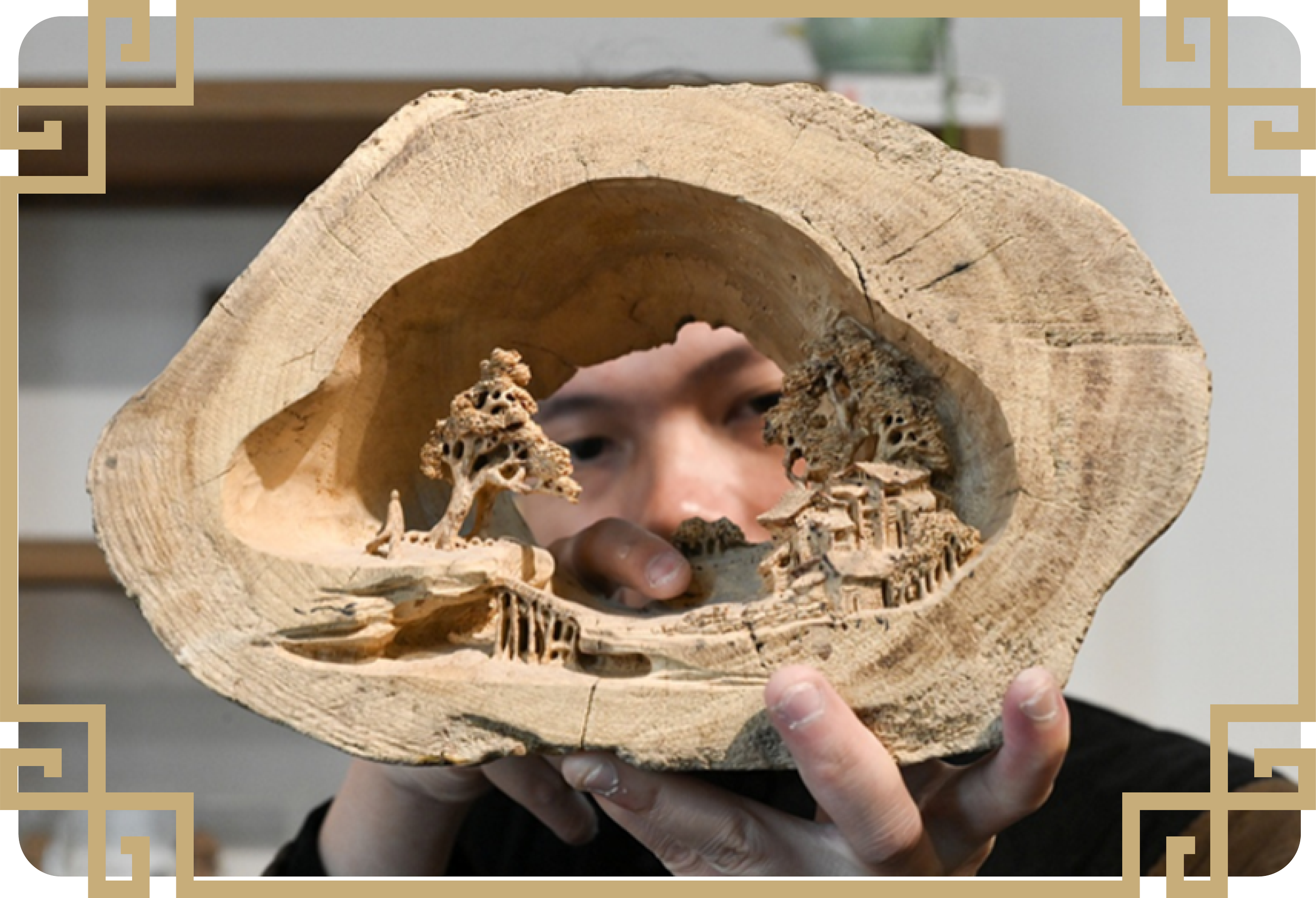
Guo Yihui, Working on one of his woodcarving pieces.

Woodcarving is a highly complex process that involves the correct combination of knives and wood, with Camphor, China fir, chinaberry, and rosewood being the most common materials. The themes woodcarvers draw from reflect the local agriculture of Chaozhou, particularly with sea animals, which embody the region's fishing history. Phoenixes, folklore, mythologies and opera also frequently appear, signifying a positive message of prosperity and longevity. The fifth generation of the Chaozhou woodcarving family and the youngest UNESCO cultural heritage inheritor, Guo Yihui, has protected the craft’s legacy. Beginning his artistic practice in Chinese painting, Guo Yihui developed his skills in the blank art of Chinese painting before exploring freehand woodcarving.